


Why do U.S. stock indices rise while individual investors fail to make money?
US stock indices have consistently maintained an upward spiral trajectory, while A-share indices resemble a roller coaster: surging in one round only to tumble in the next. Many investors attribute this disparity to national conditions. Yet the reality is that the trading mechanism and market turnover capacity of any stock market determine the resilience of its indices. In any country and at any stage, individual stocks and industry sectors always experience both rises and falls. At all times, certain industries and individual stocks remain in a bullish structure, while others stay trapped in a bearish structure. Consequently, selection matters more than effort across all markets. Investment cognition and execution capability constitute the core competitiveness for investors to survive in capital markets, with luck also playing a role in investment outcomes.
Based on long-term research and practical trading experience in both the US and Chinese stock markets, we have identified key differences. The constituent stock compilation rules for US stock indices are far more sophisticated. Meanwhile, the US market adopts the T+0 trading system, which delivers an extremely strong capacity to absorb systemic risks and extreme short-term shocks. This greatly boosts the resilience and recovery capacity of US indices. Therefore, when investing in US stocks, investors must closely monitor daily trading volume and seize speculative trading opportunities driven by short-term trend swings.
By contrast, the A-share market operates under the T+1 trading rule. This means investors must adopt standardized trend-following strategies combined with value investing, aligned with daily, weekly and monthly price trends. In a sense, Chinese investors’ speculative temperament makes them better suited for the speculative trading environment of the US stock market. Meanwhile, long-term value investing strategies adopted by European and American investors, when integrated with trend trading techniques, work far better for the A-share market in China.
I have already released a detailed analysis of A-share market trends for this week in my previous report A-Share Index Monitoring Weekly Report (October 26 – October 30, 2026). Next, I will conduct a multi-timeframe real-time analysis of US stock market performance for the same week, supported by several investment case studies to help readers fully grasp capital market rules and business logic.
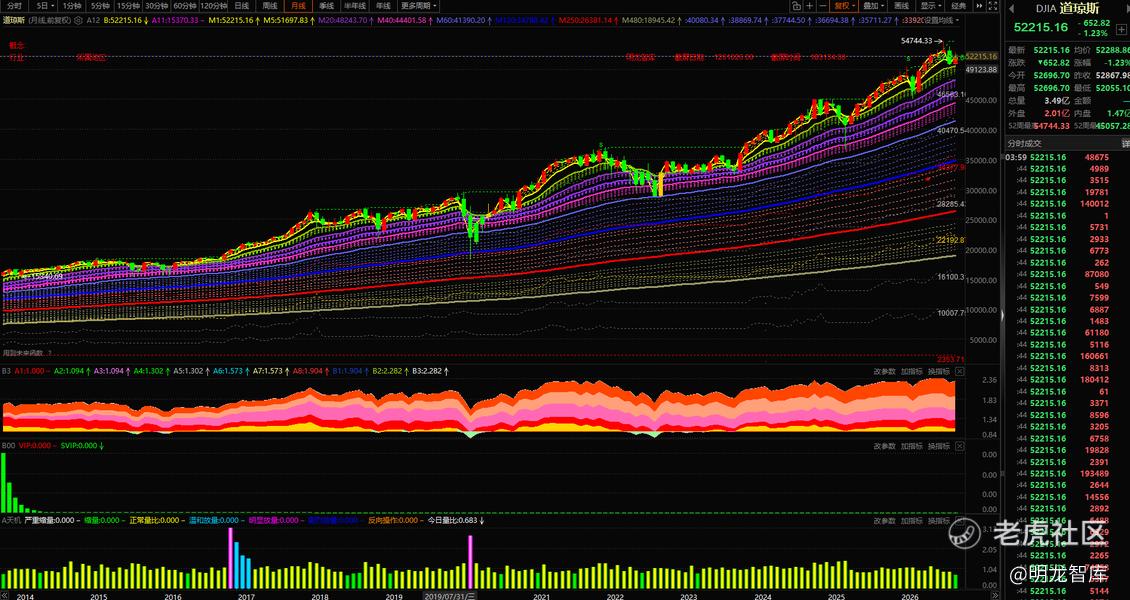
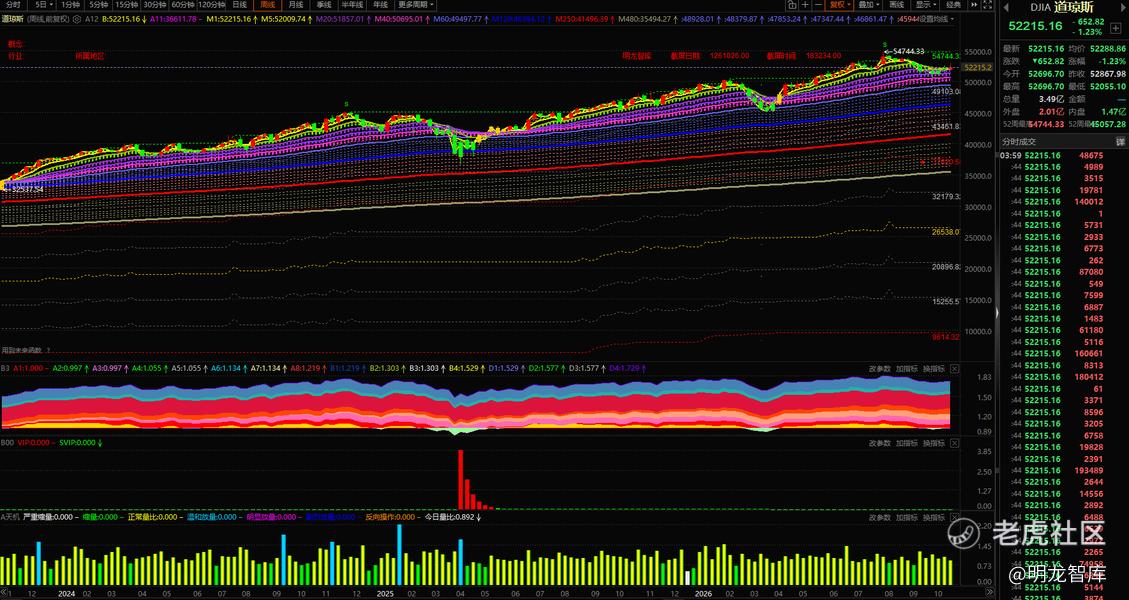
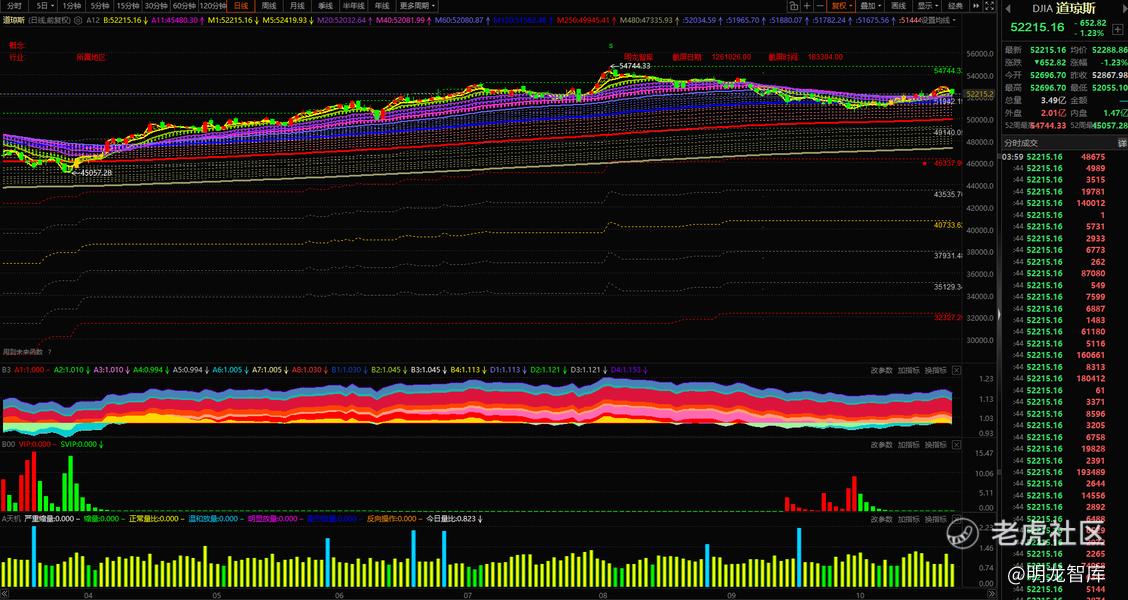
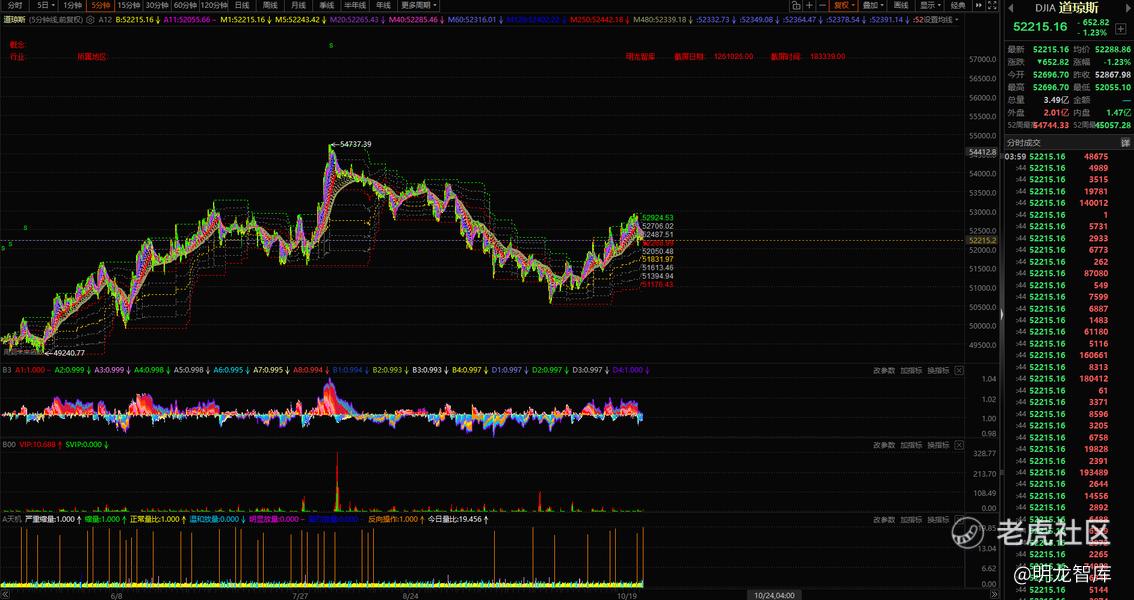
Attached are monthly, weekly, daily and 5-minute trend charts for the Dow Jones Industrial Average. From the monthly and weekly charts, we can observe that the Dow Jones Index is currently trading at a high level on the monthly timeframe, with a very high probability of undergoing structural corrections in the coming months. Two major factors will trigger this downward adjustment:
First, AI intelligence and intelligent robots will eliminate massive jobs across all industries. The layoffs will be most severe in AI internet applications and software development, with large numbers of technical professionals facing involuntary unemployment. Meanwhile, rising non-performing loan ratios and higher corporate debt loads resulting from failed startups will push up the overall social debt ratio. This will put enormous pressure on commercial banks and force governments to confront unprecedented challenges in stabilizing employment and ensuring basic livelihoods.
Second, after years of prolonged speculation, many blue-chip star stocks have become extremely large-cap with sky-high share prices, severely decoupled from their fundamental corporate valuations. A large volume of capital will flee these overvalued star stocks for risk aversion, flowing into industries and listed companies that are currently at the bottom of their monthly price cycles and hold solid growth potential over the next 3 to 5 years. In addition, the emergence of AI-powered automated investment management software will deal a heavy blow to the traditional fund industry. Most financial institutions relying on discretionary investment decisions will fail to adapt to the shifting investment landscape, leading to sharp declines in their fund product returns.
In summary, global capital markets are poised to undergo a major reshuffling, which will evolve into a devastating economic crisis for the global economy. This will mark the first large-scale structural upheaval driven by artificial intelligence, inflicting potential damage on global production systems, capital circulation mechanisms and social service systems worldwide.
After analyzing the macro environment, let us turn to individual stock examples. Take Micron Technology (MU) as an instance: its share price has formed a top structure on the monthly timeframe, and we project that the stock will gradually fall to around $500 to form a medium-term bottom over the next several months. Quantitative analysis clearly shows large-scale capital outflows from the stock at present.
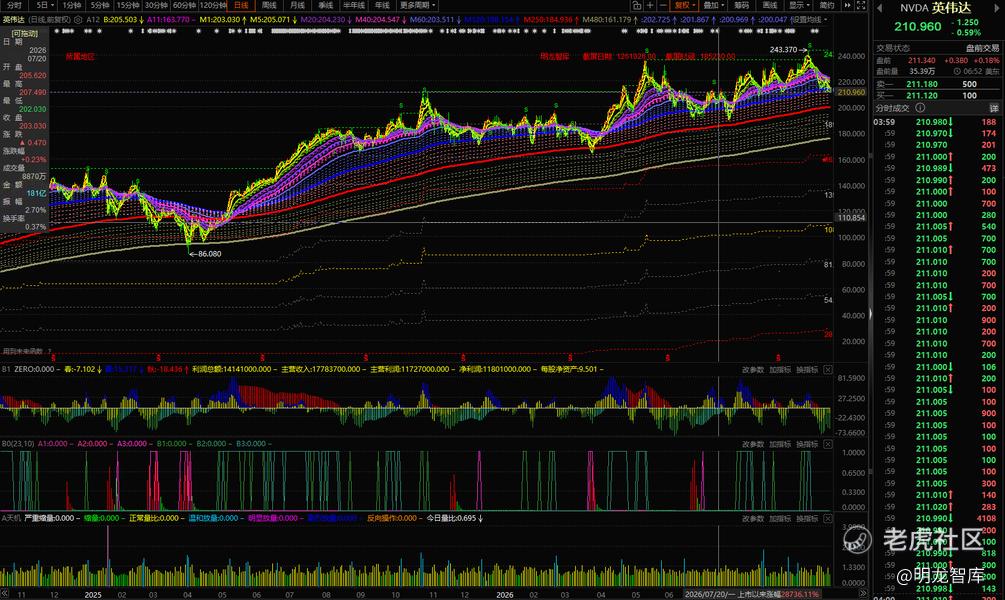
NVIDIA’s share price is expected to drop to roughly $100 in the future. The biggest risks facing the company include regulatory crackdowns and market saturation for AI smart terminals after explosive industry expansion, which will trigger overcapacity and subsequent earnings declines.
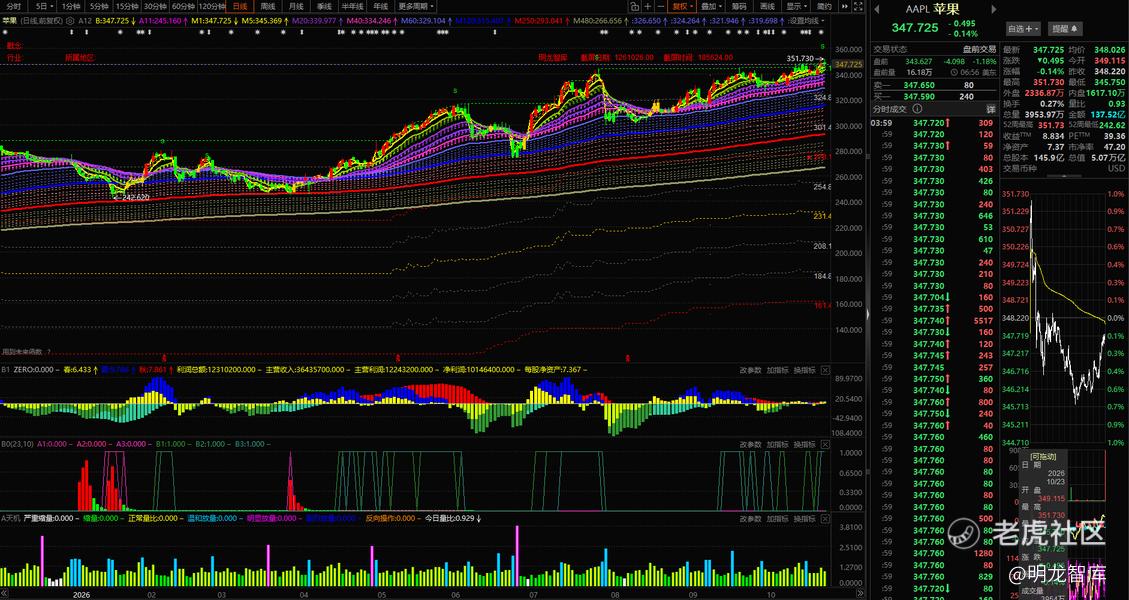
Apple Inc. is currently trading at an all-time high, with its share price projected to fall to approximately $130 within the next few years. A clear structural downtrend is about to emerge on the daily timeframe.
Below is a set of practical investment strategies for US stock trading:
Primary factor: Daily trading volume. Target stocks must maintain relatively stable daily trading volume above USD 50 million.
-
Multi-timeframe trend resonance. Industry sector indices must show an upward trend across multiple timeframes; individual stocks must display bullish trend resonance spanning monthly, weekly and daily charts.
-
Sufficient upside space on the monthly timeframe. The projected upside potential on the monthly chart must exceed 100%. There must be a large gap between current market capitalization and forward valuation. For example, if a company’s current market cap stands below USD 5 billion, while its forward industry valuation exceeds USD 30 billion, we can preliminarily determine whether institutional investors are executing market cap manipulation, after cross-verifying trading volume and industry development trends.
-
Institutional capital verification. Whether trading A-shares or US stocks, investors must conduct in-depth technical analysis to confirm institutional accumulation and market manipulation. Stocks without major institutional capital support face extremely high risks during bear markets.
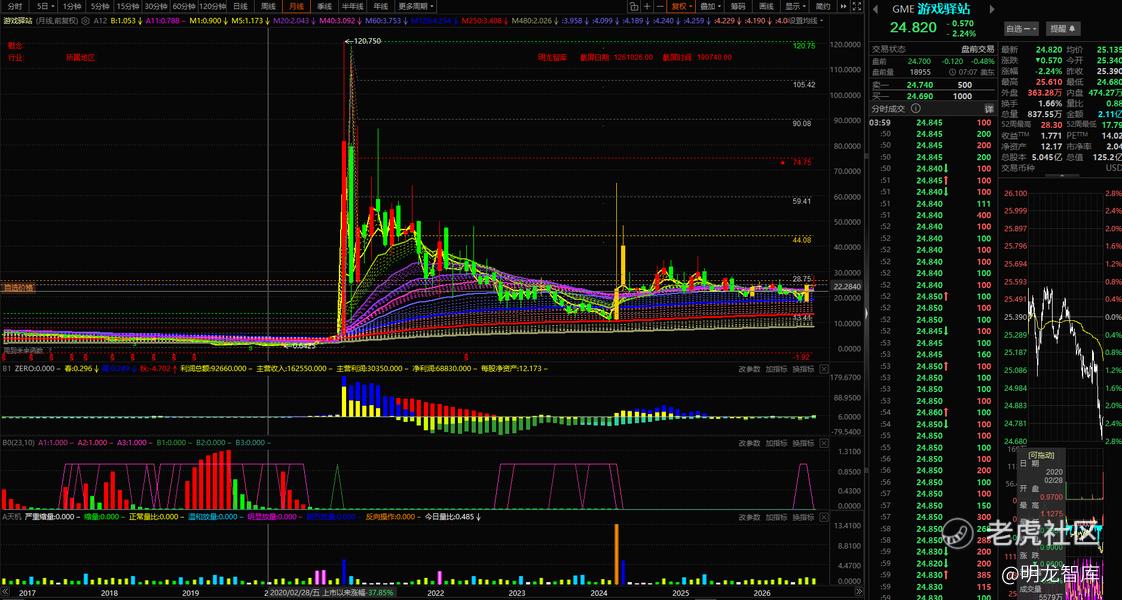
Case in point: GameStop (GME). After forming a confirmed bottom structure on the daily timeframe in August, the stock rallied roughly 40% across September and October. It is currently in a downtrend on the daily chart and will likely continue retracing. However, its weekly and monthly trends remain bullish. Driven by the boom in AI gaming scenarios, the company’s earnings are set to improve. Therefore, once the current daily-timeframe correction concludes, GameStop will retain strong long-term investment value.
UiPath Inc. (PATH) is currently stuck at the bottom of its monthly price cycle after a prolonged sideways consolidation, and trading activity has recently picked up sharply. Barring major negative news, the stock is likely to embark on a major bull run on the monthly timeframe over the next 20 to 30 months.
A comparative review of Micron Technology, NVIDIA, GameStop and UiPath reveals that the two most popular large-cap stocks — Micron and NVIDIA — offer the poorest long-term investment prospects; the longer investors hold these two stocks, the larger their potential losses will be. The only sustainable way to generate consistent long-term profits in the market is to select companies sitting at the bottom of their monthly price cycles with solid long-term growth prospects.
We must keep learning from market fluctuations, capture profits only within the boundaries of our own cognition by following major trends, and adhere strictly to standardized investment decision-making rules to guard against systemic risks stemming from global markets, individual industries and listed firms.
Both US and A-share markets feature thousands of securities locked in either monthly bear cycles or monthly bull cycles. Investors must stay vigilant at all times to identify the right directional trend and follow institutional capital flows.
Disclaimer: This text does not constitute investment advice or trading basis, and is intended solely for academic research purposes. That concludes today’s analysis. We will meet again in the next report.
免责声明:上述内容仅代表发帖人个人观点,不构成本平台的任何投资建议。
